Krantz
The Best Werewolf Short Stories 1800-1849Krantz, also identified as Hermann, is both a sailor and the principal teller of the embedded family history that explains his fear of supernatural retribution. His decisive significance lies in the way his inherited past becomes a present fate: the crimes, flight, oath, and judgment attached to his father do not remain a completed history but extend into Krantz’s own life, culminating in his abduction and death by an enormous tiger.
Identity and Family Background
Krantz was born in Transylvania into a family marked by social bondage and scandal. His father was a serf belonging to a wealthy Hungarian nobleman, yet he was neither poor nor uneducated. His intelligence, wealth, respectability, and administrative ability had raised him to the position of steward. The contradiction between his capable life and his legal condition is central to the family’s vulnerability: regardless of prosperity or merit, a person born a serf remained a serf.
Krantz’s father had been married for approximately five years and had three children. The eldest was Cæsar, the second was Krantz himself, whose given name was Hermann, and the youngest was Marcella. Their high-sounding names reflected the continued use of Latin in that region. Their mother was celebrated for her beauty but condemned by the narrative as morally unfaithful. During the father’s absence, the local nobleman pursued her, and she yielded to him. The father returned unexpectedly and found her in the seducer’s company, making the adultery, in his view, undeniable.
Overcome by rage, Krantz’s father murdered both his wife and her seducer. Because he knew that his status as a serf would prevent the authorities from accepting even grave provocation as a sufficient defense, he gathered what money he could, harnessed his horses to a sleigh, and fled with his children in the middle of winter. He continued without interruption until he had concealed himself in the remote and intricate regions of the Hartz Mountains. Krantz later makes clear that he learned this part of the history only after the events had occurred, so his account is itself a delayed reconstruction of a family trauma.
Childhood in the Hartz Mountains
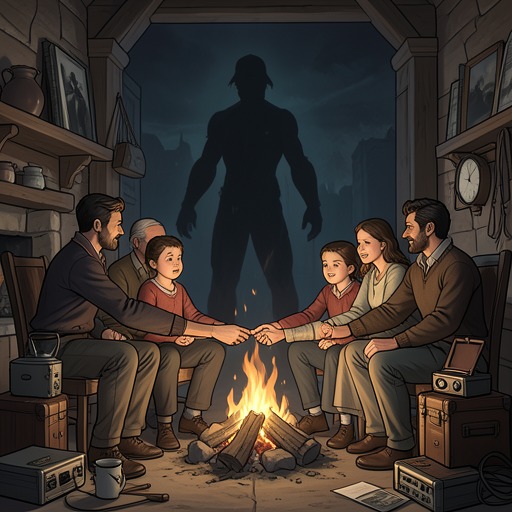
The children’s life in the Hartz Mountains was isolated, harsh, and shaped by their father’s fear. He neglected them severely, and when he left the cottage he would not allow them fuel because he feared that they might come to harm. During the coldest hours they crawled beneath heaps of bearskins to keep warm, waiting for the evening fire that became their chief comfort. Their confinement made them unusually thoughtful for their ages: through the short winter days they sat silently, longing for the snow to melt, the leaves to return, and the birds to sing so that they could again be allowed outside.
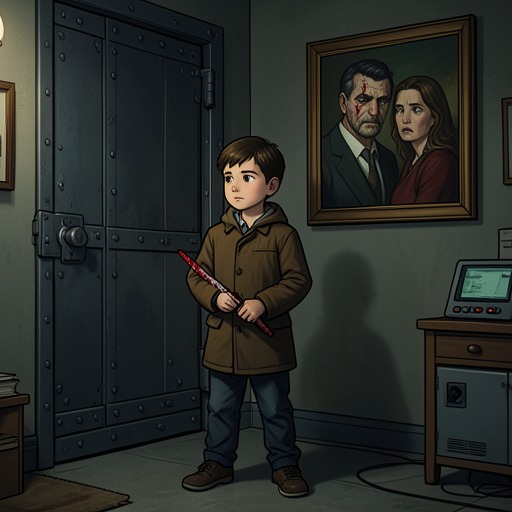
The defining episode of Krantz’s childhood began when Cæsar was nine, Krantz seven, and Marcella five. One evening their father returned late, unsuccessful in his work, chilled by severe weather, and in an exceptionally bad temper. While the children helped revive the embers, he seized Marcella by the arm and threw her aside. She struck her mouth and bled heavily, but, accustomed to ill treatment and frightened of him, she did not cry. Cæsar tried to raise her, while their father sat beside the hearth, muttering abuse of women. The children thereafter refused the warmth of the fire and remained together with the injured Marcella in a corner.
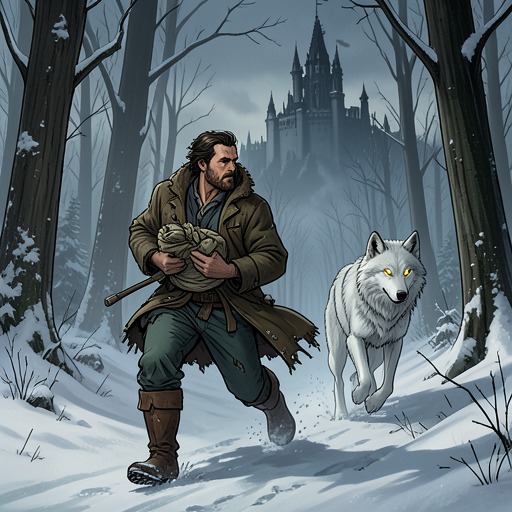
A wolf howled close beneath the cottage window. Their father seized his gun and went out, while the children waited for his return. When the hours passed without a gunshot, Cæsar washed the blood from Marcella’s mouth and prepared food for the family. Their uncertainty lasted until near midnight, when a horn sounded outside and their father entered with a young woman and a large, dark hunter. Krantz later learns that the father had pursued a rare white wolf for several hours. The animal repeatedly drew him onward, retreating slowly, stopping to snarl, and then racing away whenever he approached.
The pursuit carried Krantz’s father upward through the mountain forest toward an open space that hunters regarded as dangerous because it was believed to be inhabited by evil influences. Whether he disbelieved the warnings or ignored them in the excitement of the chase is left uncertain. The white wolf lured him into the clearing, slackened her pace, and vanished just as he raised his gun. This disappearance established the supernatural pattern that would govern Krantz’s understanding of his family: an apparently physical pursuit opens into a realm where ordinary causality no longer suffices.
The Inherited Oath and Supernatural Judgment
The hunter who entered the cottage was Wilfred of Barnsdorf, Krantz’s father’s second cousin. Wilfred recognized Krantz’s father as a fellow fugitive and relative in misfortune. He had himself been a serf and had fled after killing a nobleman who demanded the surrender of his daughter. Wilfred and his daughter were to remain at the cottage temporarily, and the two adult men drank together before falling asleep.
The family’s apparent refuge soon became the scene of a supernatural reckoning. Wilfred later rushed into the cottage searching for his daughter, and Krantz’s father answered with hostility, insisting that she belonged in hell and ordering the hunter to leave. The confrontation reveals that the family’s earlier crimes and the newcomers’ history are bound together by more than kinship. Wilfred’s judgment identifies murder as the condition that permits supernatural powers to act against a person.
According to the spirit’s sentence, Krantz’s father had committed a double murder and would therefore pay the penalty attached to his marriage vow. Two of his children were already destined to be lost, while the third would follow because the oath had been registered. The punishment was not immediate death but continued life: the spirit declares that it would be kindness to kill him, yet his sentence is that he must live. This judgment makes Krantz’s existence a specifically inherited burden. He survives, but survival is presented not as liberation but as the remaining stage of a curse.
After the judgment, Krantz’s father embraced him and knelt in prayer. The next morning he left the cottage forever, taking Krantz with him toward Holland. They reached Amsterdam safely, but the father soon suffered a brain fever and died raving mad. Krantz was placed in an asylum and later sent to sea before the mast. His movement from Transylvania to the Hartz Mountains, then to Holland and the sea, is therefore not a voluntary adventure so much as the geographical afterlife of flight, punishment, and displacement.
Life at Sea and Presentiment of Death
Years later, while sailing between the isles in weather with less wind than usual, Krantz tells Philip that his own history may corroborate the mysterious tale Philip had previously confided to him. He presents the account as a story strange enough to match Philip’s experience and directs Philip’s attention to the Hartz Mountains, whose supernatural reputation Philip knows only from reading. Krantz’s role here is more than that of a witness: he becomes the narrator through whom a hidden family history is made available to another character and to the reader.
The telling changes Krantz’s behavior. After confiding the history, he becomes silent and melancholy, losing his former liveliness. As the vessel enters the Straits and Philip discusses their future arrival at Goa, Krantz says that he has a presentiment that he will never see the city. He rejects the suggestion that he is merely ill, insisting that he is sound in body and mind and that the warning has grown stronger with every hour.
Krantz’s response to the presentiment combines dread, resignation, and a peculiar gladness. He says that he has little fear of death and that he has lived long enough to leave the world without regret, although separation from Philip and Amine would be painful because they are the only two people now dear to him. He interprets the warning as the work of a good spirit urging him to prepare for another world. He also asks Philip to take and secure the gold he carries, treating the request as practical preparation rather than superstition. Philip attributes the feeling to over-exertion and the excitement of the preceding months, but Krantz insists that another presentiment accompanies it, one that makes the thought of departure strangely welcome.
Death and Narrative Significance
Krantz’s warning is fulfilled abruptly. After Philip has questioned what danger could threaten Krantz without threatening him equally, a tremendous roar and rush break through the air. A violent blow throws Philip onto his back, and he sees Krantz’s naked body carried away at extraordinary speed by an enormous tiger. Within seconds both the animal and Krantz have vanished into the jungle.
Philip’s grief confirms the intimacy of their bond. He calls Krantz his friend and brother and recognizes that the presentiment was true. For more than an hour he remains fixed at the place of the attack, initially indifferent to the danger around him. When he finally dresses and regains some composure, he stares at Krantz’s abandoned clothes and the gold lying on the sand. The gold, which Krantz had tried to transfer to Philip before his death, becomes the material proof of his foreknowledge and the surviving token of their friendship.
Philip interprets the death through the supernatural history Krantz has just told. He concludes that Krantz’s destiny has been fulfilled and that the spirit-hunter and his wolfish daughter have been avenged. The ending thus joins three temporal layers: the father’s double murder, the supernatural judgment in the Hartz Mountains, and the later tiger attack in the tropics. Krantz dies far from the mountains, but the narrative refuses to treat distance as escape. His final disappearance converts inherited guilt into visible fate and makes his life the last, tragic extension of an oath pronounced before he was old enough to understand it.